Crawl Space Mold Removal Cost
Last reviewed 2026-10-30
Removing mold from a crawl space typically costs $500 to $2,000, according to both This Old House (updated March 2026, cost data mostly from Angi) and Fixr (2025). This Old House adds that the cost can be much higher when the crawl space is hard to get into, and its separate crawl space encapsulation guide puts mold removal at $500–$4,000 when a crawl space has had moisture problems for a long time. Moisture-control work that contractors may quote alongside, such as a vapor barrier, a dehumidifier or full encapsulation, is a separate job: This Old House puts full encapsulation at $1,500–$15,000, with most homeowners paying around $5,500.
What is included in the price
The removal price covers the mold itself. Fixr describes crawl space removal as possibly including containment, air scrubbers, vacuuming and cleaning the affected surfaces, and says its $500–$2,000 range covers an initial consultation, testing and removal. The price depends on the size of the crawl space and how much mold is present.
In This Old House’s table, crawl spaces ($500–$2,000) come in below basements ($500–$3,000). Compare other parts of the house on our mold remediation cost page.
Moisture-control work quoted alongside
| Item | This Old House (2026) | Fixr (2025) |
|---|---|---|
| Mold removal in a crawl space | $500–$2,000 (remediation guide); $500–$4,000 after long-term moisture problems (encapsulation guide) | $500–$2,000 |
| Full encapsulation | $1,500–$15,000, most homeowners pay around $5,500; $3–$7 per sq ft, up to $10 | $2,000–$15,000; $2–$6 per sq ft |
| Dehumidifier | $800–$2,000 installed, with wiring | $750–$1,700 |
| Vapor barrier | — | $1,500–$4,000 |
| Replacing insulation | — | $1,000–$3,500 |
| Drainage system | $600–$1,800 | — |
| Permit | usually $100–$250 | may be needed; check locally |
| General crawl space condition check (not a mold inspection with lab samples; see mold inspection cost) | — | $100–$300 |
This Old House says labor makes up 50% to 70% of an encapsulation bill. The two guides measure some items differently, so use the table to sanity-check a quote, not as a price list.
Factors that raise or reduce the total
- Size and access. Bigger crawl spaces cost more, and limited access can push the price well above the typical range (This Old House).
- How long the moisture has been there. Damaged wood or foundation may need repairs. This Old House puts moderate foundation repairs at $2,000–$7,000; Fixr puts removing water from a crawl space and repairing the damage at $2,000–$10,000.
- Wet or moldy insulation, which Fixr says may need cleaning, repair or replacement.
- Other problems found along the way. This Old House says treating pests can cost as little as $200 for a small infestation and up to $4,000 for a substantial problem such as termites, and asbestos removal $1,800–$2,800 if old materials contain it.
- Cleaning. Fixr prices crawl space cleaning at $500–$2,500, more if mold or pests are present.
Moisture control after removal
The EPA says that if you clean up mold but don’t fix the water problem, “most likely, the mold problem will come back,” and it suggests keeping indoor humidity below 60%, ideally between 30% and 50%. A humidity meter costs about $10–$50 (EPA).
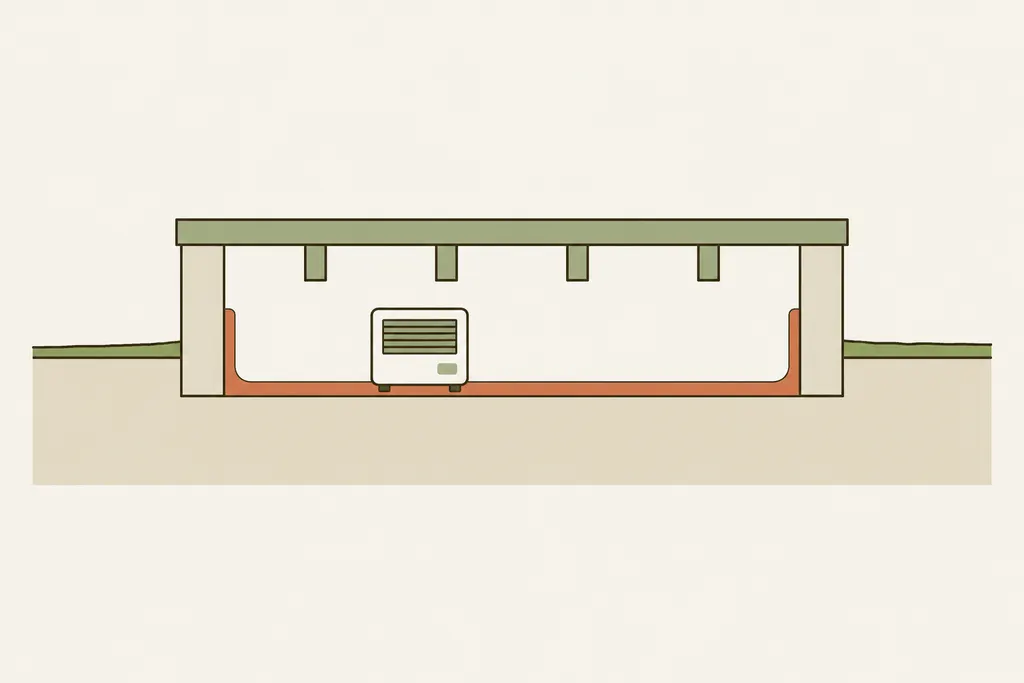
Where the moisture comes from shapes the fix:
- Humid outside air. The U.S. Department of Energy’s Building America program found that in humid climates, outside air coming in through vents is often more moist than the crawl space air, “leading to structural, mold, and pest problems.” Its research on closed, conditioned crawl spaces showed humidity reduced by more than 20%. The 2014 DOE profile says this research influenced changes to the 2009 and 2012 editions of the International Residential Code; your local building code decides what applies to your home.
- Fans venting into the crawl space. The Building America Solution Center warns that bathroom and kitchen exhaust fans that vent into a crawl space instead of outdoors can cause mold growth and wood damage.
- Water getting in. This Old House notes that a dehumidifier needs a place to drain, that homes with a high water table may need a sump pump, and that a full drainage system costs $600–$1,800.
This Old House cautions that encapsulation done wrong can trap moisture and make things worse, and suggests professionals for most homes.
Insurance and home sale considerations
Insurance depends on the cause. The Insurance Information Institute says mold is generally treated as a maintenance issue that standard homeowners policies don’t cover, but when mold is “the direct result of a covered peril such as a burst pipe,” the cost of eliminating it may be covered. In Texas, the state Department of Insurance says most home policies cover sudden and accidental water damage but usually not gradual leaks or seepage, and floods need a separate flood policy. Check your policy and ask your insurer; more in Does homeowners insurance cover mold?
Keep the paperwork from the job. One state example: in Texas, a licensed remediator gives the owner a Certificate of Mold Damage Remediation (a licensed assessment consultant can also sign its inspection section), and the state licensing agency explains that under Texas Insurance Code §544.303 an insurer may not make an adverse underwriting decision on a home policy based on previous mold damage when the law’s requirements are met (as described by TDLR, checked October 2026). If you plan to sell, disclosure rules vary by state; read selling a house with mold and ask a real estate attorney or agent where you live.
When to call a professional
Here is what the EPA’s guide for homeowners says:
- More than about 10 square feet, or a lot of water damage. Under about 10 square feet (roughly a 3 ft by 3 ft patch), the EPA says that “in most cases, you can handle the job yourself.” For larger areas or a lot of water damage, it points to its professional guide, Mold Remediation in Schools and Commercial Buildings, and says a contractor you hire should have experience cleaning up mold.
- Sewage or other contaminated water. The EPA says to “call in a professional” with experience in buildings damaged by contaminated water.
- Suspected mold in the HVAC system. “Do not run the HVAC system if you know or suspect that it is contaminated with mold,” the EPA says; it could spread mold throughout the building.
- Hidden mold, such as a moldy smell with no visible source. The EPA says to “consider hiring an experienced professional.”
- Health concerns. The EPA advises consulting a health professional before starting cleanup. Talk to your doctor.
Our own suggestion, separate from the EPA’s size guideline: leave crawl space work to a professional, even for a small spot. Crawl spaces are cramped and hard to reach, and finding and fixing the moisture source there is part of the job. Our Mold Check gives the same advice for crawl spaces.
How to compare contractor estimates
- Ask for mold removal and moisture-control work as separate line items, each with its own price.
- For each extra item (vapor barrier, dehumidifier, drainage, insulation), ask what problem it solves in your crawl space and how they measured that problem.
- This Old House suggests having an independent, noncommissioned professional inspect and recommend a solution, and getting a signed contract with itemized charges before work begins.
- Get at least three estimates (This Old House), and ask who pulls any permit and whether the contractor is licensed and insured for mold work in your state.
- Ask how they will show the job is finished.
How serious is your mold? Take the Mold Check
Next step: get an on-site assessment from a licensed mold remediation professional.
Ask for a written scope that covers the moisture source, containment, removal, and how they will confirm the job is done.
Sources
- This Old House — How Much Does Mold Remediation Cost? (2026 Guide) (updated Mar 11, 2026; cost data mostly from Angi)
- This Old House — How Much Does Crawl Space Encapsulation Cost? (updated Mar 13, 2026)
- Fixr — Mold Remediation Cost (updated Aug 29, 2025)
- Fixr — Crawl Space Repair Cost (updated Jan 31, 2025)
- U.S. EPA — A Brief Guide to Mold, Moisture and Your Home (page last updated Feb 18, 2026)
- U.S. Department of Energy — Unvented, Conditioned Crawlspaces: Building America Top Innovation (Jan 7, 2014)
- PNNL Building America Solution Center (U.S. DOE) — Look at Exhaust Fans for Venting to Outside (last updated Jul 25, 2025)
- Insurance Information Institute (Triple-I) — Protecting your home from mold (undated; accessed Oct 30, 2026)
- Texas Department of Insurance — When are water damage and mold covered by insurance? (updated Apr 24, 2025)
- Texas Department of Licensing and Regulation — Mold Assessors and Remediators: Frequently Asked Questions (accessed Oct 30, 2026)
Illustrations on this page are AI-generated to help you picture the situation. They are not photos of real homes, jobs or people.
Health and safety. Mold can affect health, especially for people with allergies, asthma, or weakened immune systems. This site does not give medical advice — for health concerns talk to a doctor. For mold removal, contact a licensed mold remediation professional (licensing rules vary by state).