Mold Inspection Cost
Last reviewed 2026-10-30
A mold inspection typically costs $450 to $800, and most people pay about $500, according to Fixr (updated January 2025). That figure is for a 2,500 sq ft home with two samples sent to a lab. A 1,000 sq ft home with one sample is closer to $300, and a larger home where the inspector opens drywall to sample can reach $1,000. If the inspector finds nothing that needs sampling, the visit alone may cost $300–$600. If you can already see the mold, you may not need samples at all: the EPA says that “in most cases, if visible mold growth is present, sampling is unnecessary.”
What changes the price
| What you’re paying for | Fixr (2025) |
|---|---|
| Inspection plus two lab samples, 2,500 sq ft home | about $500 (range $450–$800) |
| Inspection plus one sample, 1,000 sq ft home | about $300 |
| Larger home, two samples, drywall opened for testing | about $1,000 |
| Inspection only, when no suspected mold needs sampling | $300–$600 |
| Each additional sample | $60–$80 |
| Drywall removed during inspection and testing | $16–$20 per sq ft |
| Hard-to-reach HVAC system, inspection and testing | up to about $1,500 |
Fixr names the size of the home as the biggest factor; samples, access and opening walls add to it. This table uses Fixr alone, the only cost guide for inspections we could verify in full, so local prices can differ.
What happens during a mold inspection
An inspection looks for two things: mold and the moisture feeding it. Fixr describes a walk-through of the living areas, basement, attic, crawl spaces and HVAC vents, noting visible growth, musty smells and water damage, and the water sources behind them.
Instruments help find moisture you can’t see. Moisture meters measure moisture in materials, and infrared cameras show temperature differences that can point to moisture behind walls or ceilings, This Old House explains. New York’s labor department describes the assessor’s visit as a visual inspection that “may include the use of a moisture meter and, in rare cases, mold sampling,” plus finding the underlying source of moisture when possible.
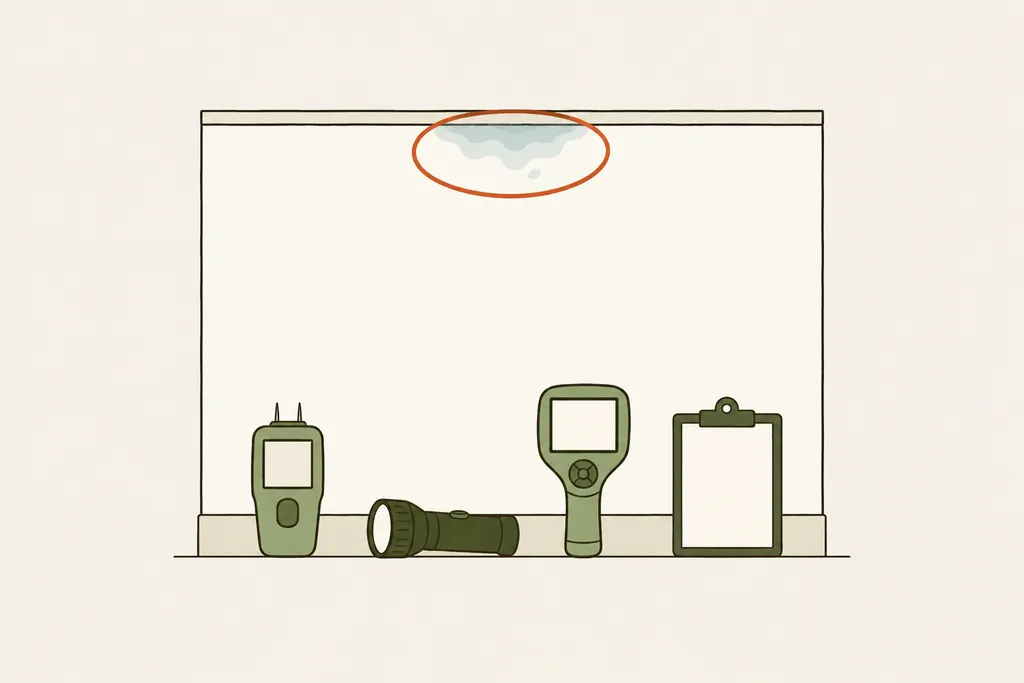
Ask for a written report: professionals “often provide you with a written report, including recommendations for fixes,” This Old House notes.
Mold inspection vs. mold testing
An inspection finds where the mold is and why it’s there. Testing means taking air, surface or material samples and paying a lab to analyze them. Fixr says inspections usually include some testing, and prices testing on its own at $50–$700.
Often you don’t need the test. The CDC says plainly: “CDC does not recommend mold testing.” The EPA adds that no federal limits exist for mold or mold spores, so sampling can’t show whether a home meets a federal standard. As This Old House puts it, “A mold inspection helps you locate and fix the problem, not identify the type of mold.” Details and prices by test type: mold testing cost.
When an inspection is worth paying for
- You smell mold but can’t see it, a sign of possible hidden mold (EPA; see the list below and mold in walls).
- After a leak or flood you couldn’t dry quickly, or a musty smell that comes back after cleaning, two cases where This Old House suggests a professional inspection.
- Before a large remediation job. In New York, for example (Labor Law Article 32), if you hire someone for more than 10 square feet of mold, a licensed assessor first inspects and writes a remediation plan, and contractors price their work from it.
- After remediation, to confirm the job is done. In New York, the assessor checks the work and issues a written clearance report when it passes. The EPA’s test for “done”: the moisture problem is fixed, and visible mold and moldy odors are gone.
- For an insurance claim. In Texas, the state Department of Insurance says a mold claim needs an inspection showing the mold was removed and the cause was fixed. Ask your insurer what it requires.
An inspection is not a health check; for health concerns, talk to a doctor.
When to call a professional
Here is what the EPA’s guide for homeowners says:
- More than about 10 square feet, or a lot of water damage. Under about 10 square feet (roughly a 3 ft by 3 ft patch), the EPA says that “in most cases, you can handle the job yourself.” For larger areas or a lot of water damage, it points to its professional guide, Mold Remediation in Schools and Commercial Buildings, and says a contractor you hire should have experience cleaning up mold.
- Sewage or other contaminated water. The EPA says to “call in a professional” with experience in buildings damaged by contaminated water.
- Suspected mold in the HVAC system. “Do not run the HVAC system if you know or suspect that it is contaminated with mold,” the EPA says; it could spread mold throughout the building.
- Hidden mold, such as a moldy smell with no visible source. The EPA says to “consider hiring an experienced professional.”
- Health concerns. The EPA advises consulting a health professional before starting cleanup. Talk to your doctor.
Our Mold Check asks the same questions.
Choosing an independent inspector
When the same company inspects your home and then removes the mold, it is both judging the job and selling it. Fixr notes that some remediation companies waive or include the inspection fee if you hire them for removal, and suggests an inspector unaffiliated with a remediation company, for example one certified through the American Board of Industrial Hygiene or the American Council for Accredited Certification.
Some states write this separation into law. Two examples:
- New York. The state’s mold law (Labor Law Article 32; licensing required since January 1, 2016) prohibits the same individual from doing both the assessment and the remediation on the same property, a rule the state labor department describes as protection against fraud.
- Texas. Under the state’s mold law (Occupations Code chapter 1958) and TDLR rules, a licensee may not do both mold assessment and mold remediation on the same project, except school district employees working for their own district.
Other states differ; check yours.
Questions to ask before you book:
- Are you licensed or certified, and by whom?
- Do you, or a company you’re connected to, also do mold removal?
- What does the price include: how many samples, lab fees, a written report?
What the report should include
New York’s rules for a mold remediation plan make a useful checklist anywhere. The plan should list:
- the rooms or areas to be remediated;
- the source of the moisture and how to fix it, including what kind of contractor can fix it;
- an estimate of how much material has to be cleaned or removed;
- the removal methods for each area;
- containment, where needed, to keep mold from spreading;
- protective equipment for the workers;
- the clearance criteria that show the cleanup is finished;
- an estimate of cost and time.
With a plan like this, every contractor prices the same scope, which makes quotes easier to compare. Typical removal prices are on our mold remediation cost page.
How serious is your mold? Take the Mold Check
Next step: get an on-site assessment from a licensed mold remediation professional.
Ask for a written scope that covers the moisture source, containment, removal, and how they will confirm the job is done.
Sources
- Fixr — Mold Inspection Cost (updated Jan 31, 2025)
- Fixr — Mold Remediation Cost (updated Aug 29, 2025)
- This Old House — Signs of a Mold Problem (updated May 27, 2026)
- U.S. EPA — A Brief Guide to Mold, Moisture and Your Home (page last updated Feb 18, 2026)
- U.S. CDC — Mold (page dated Sep 26, 2024)
- New York State Department of Labor — What to Expect When You Hire a Mold Assessor and Mold Remediation Contractor (fact sheet P228, Nov 2017)
- New York State Department of Labor — Mold Program (accessed Oct 30, 2026)
- New York State Department of Labor — Mold Frequently Asked Questions (accessed Oct 30, 2026)
- Texas Department of Licensing and Regulation — Mold Assessors and Remediators: Frequently Asked Questions (accessed Oct 30, 2026)
- Texas Department of Licensing and Regulation — Mold Assessors and Remediators: Laws and Rules (accessed Oct 30, 2026)
- Texas Department of Insurance — When are water damage and mold covered by insurance? (updated Apr 24, 2025)
Illustrations on this page are AI-generated to help you picture the situation. They are not photos of real homes, jobs or people.
Health and safety. Mold can affect health, especially for people with allergies, asthma, or weakened immune systems. This site does not give medical advice — for health concerns talk to a doctor. For mold removal, contact a licensed mold remediation professional (licensing rules vary by state).