Mold Testing Cost
Last reviewed 2026-10-30
Professional mold testing on its own typically costs $50 to $700, depending on the type of test, according to Fixr (updated January 2025). An air test sits at the top of that range, at $500–$700, and each extra sample adds $60–$80. Testing bundled with an inspection usually runs $450–$800. Before you pay, know that the CDC says it “does not recommend mold testing,” and the EPA says that when mold is visible, sampling is usually unnecessary. Whatever type it turns out to be, the mold still has to be removed.
Cost by type of test
| Test | Typical cost | Source |
|---|---|---|
| HVAC mold test (air and tape samples from the filter and ducts) | $50–$75 per test, lab fees included | Fixr (2025) |
| Mold culture (the lab grows the sample) | $50–$75 | Fixr (2025) |
| Stain testing (the lab identifies the type and counts spores) | $150–$200 | Fixr (2025) |
| Mold air test | $500–$700 | Fixr (2025) |
| Each additional sample | $60–$80 | Fixr (2025) |
| Inspection plus testing | $450–$800 | Fixr (2025) |
| Lab fee only, at some labs: is a sample on clear tape mold or not | about $50 | EPA air duct guide |
The test types are listed as Fixr names them. Fixr’s per-test prices cover testing only. Once labor is added, a single HVAC test usually comes closer to the $450–$800 inspection price, and a hard-to-reach system can push inspection and testing to about $1,500. The EPA’s $50 figure comes from its air duct guide: if a service provider says your ducts have mold, ask them to show you, because whether something is mold or just looks like it can only be settled by an expert, sometimes with a lab.
Air, surface and bulk samples
The EPA lists the main kinds of samples a professional may take:
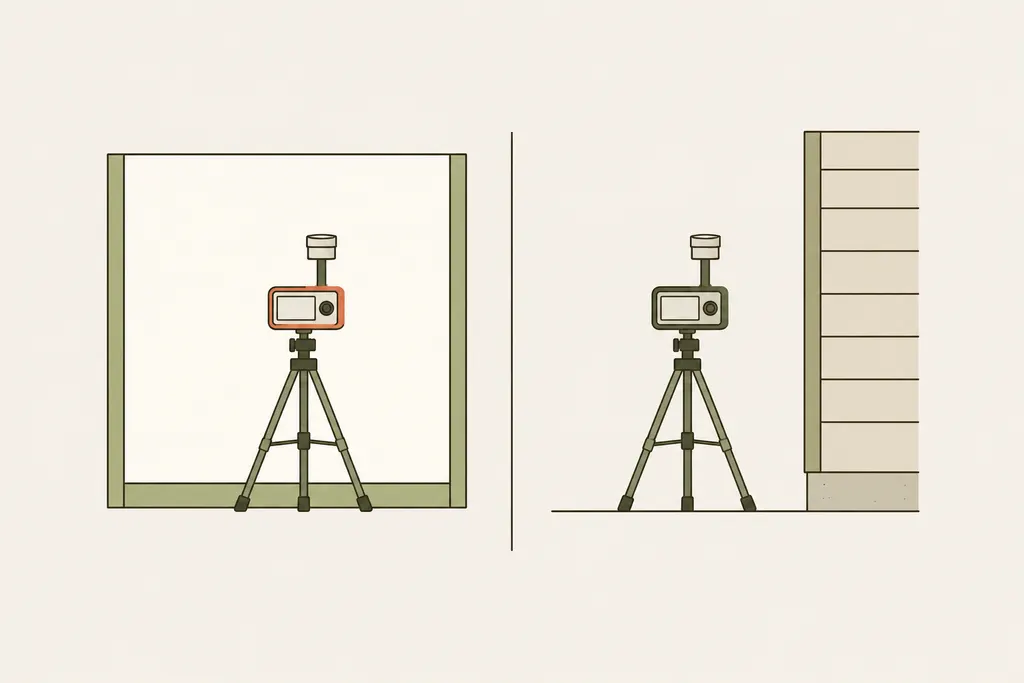
- Air samples. Fixr describes cassette and pump samplers that trap airborne spores for a lab to count. The EPA calls air sampling a snapshot: it shows only what was in the air “at the moment when the sample was taken.” A useful air test includes an outdoor sample for comparison. The EPA lists leaving it out among the pitfalls when inexperienced people take samples.
- Surface samples. Tape lifts and swabs from a surface. The EPA says surface sampling may be useful to check whether an area has been adequately cleaned after remediation.
- Bulk samples. Pieces of material such as carpet, insulation or wallboard sent to the lab.
- Water samples from places like condensate drain pans.
Home test kits vs. professional testing
Some home kits are settling plates: a dish you leave open so spores land and grow. The University of Connecticut’s environmental health office says that while these kits “can be cheap,” it does not advocate their use: spores are everywhere, so “it would be rare not to get mold growth on the petri dishes,” there are no accepted standards for running the test or reading the result, and the dish is easy to contaminate. Fixr also calls the reliability of home kits questionable. New York’s labor department makes the same point about sampling in general: it “will almost always reveal the presence of mold or mold spores.”
Poorly planned professional sampling has its own problems. The EPA says sampling should be done by people with specific experience in designing sampling plans and interpreting results, and lists pitfalls when inexperienced people sample: too few samples, inconsistent methods, contaminated samples and no outdoor comparison sample.
If what you really want to know is whether your home is damp, a humidity meter answers that. The EPA puts them at about $10–$50 and suggests keeping indoor humidity below 60%, ideally 30–50%. A musty smell is a better reason to book an inspection than a kit; see also musty smell in the basement.
When testing is worth it
The EPA says sampling may help in specific cases:
- when there is a legal dispute;
- when the source of the mold is unclear;
- when health concerns are involved (talk to a doctor about health questions);
- after remediation, to help confirm the cleanup worked.
Even then, the EPA warns that if you can’t take enough samples to answer the question, “it would be preferable not to sample.” In Texas, the state licensing agency says that if you pay for testing before remediation, the licensed assessment consultant should set the criteria for interpreting the results.
Insurance may not pay for it. In Texas, the state Department of Insurance notes that “most home policies don’t include mold cleanup and testing after a damaged item is removed,” though your insurance company may let you add coverage for cleanup caused by a covered loss. Check your own policy and ask your insurer.
How to read lab results
- There is no pass/fail number. No EPA or other federal limits exist for mold or mold spores, and New York’s labor department notes there are no national or state standards to compare results against.
- Compare indoors to outdoors. After remediation, the EPA says the kinds and concentrations of mold indoors should be similar to what is found outside. Ask whether an outdoor sample was taken.
- The species rarely changes the plan. The CDC: “No matter what type of mold is present, you need to remove it.”
- Results need the site. The Texas licensing agency says sample results “cannot be interpreted without physical inspection of the contaminated area.”
- A lab report is not a health assessment. For health questions, talk to a doctor.
If the results confirm a problem, the next cost is removal: see mold remediation cost.
When to call a professional
Here is what the EPA’s guide for homeowners says:
- More than about 10 square feet, or a lot of water damage. Under about 10 square feet (roughly a 3 ft by 3 ft patch), the EPA says that “in most cases, you can handle the job yourself.” For larger areas or a lot of water damage, it points to its professional guide, Mold Remediation in Schools and Commercial Buildings, and says a contractor you hire should have experience cleaning up mold.
- Sewage or other contaminated water. The EPA says to “call in a professional” with experience in buildings damaged by contaminated water.
- Suspected mold in the HVAC system. “Do not run the HVAC system if you know or suspect that it is contaminated with mold,” the EPA says; it could spread mold throughout the building.
- Hidden mold, such as a moldy smell with no visible source. The EPA says to “consider hiring an experienced professional.”
- Health concerns. The EPA advises consulting a health professional before starting cleanup. Talk to your doctor.
Our Mold Check asks the same questions.
How serious is your mold? Take the Mold Check
Next step: get an on-site assessment from a licensed mold remediation professional.
Ask for a written scope that covers the moisture source, containment, removal, and how they will confirm the job is done.
Sources
- Fixr — Mold Inspection Cost, sections on mold testing (updated Jan 31, 2025)
- U.S. EPA — Mold Remediation in Schools and Commercial Buildings, Chapter 3 (page last updated Apr 29, 2026)
- U.S. EPA — A Brief Guide to Mold, Moisture and Your Home (page last updated Feb 18, 2026)
- U.S. EPA — Should You Have the Air Ducts in Your Home Cleaned? (page last updated Feb 19, 2026)
- U.S. CDC — Mold (page dated Sep 26, 2024)
- University of Connecticut Environmental Health and Safety — Facts About DIY Mold Test Kits (undated; accessed Oct 30, 2026)
- New York State Department of Labor — What to Expect When You Hire a Mold Assessor and Mold Remediation Contractor (fact sheet P228, Nov 2017)
- Texas Department of Licensing and Regulation — Mold Remediation Consumer Protection (CP Form-001, Jan 2025)
- Texas Department of Insurance — When are water damage and mold covered by insurance? (updated Apr 24, 2025)
Illustrations on this page are AI-generated to help you picture the situation. They are not photos of real homes, jobs or people.
Health and safety. Mold can affect health, especially for people with allergies, asthma, or weakened immune systems. This site does not give medical advice — for health concerns talk to a doctor. For mold removal, contact a licensed mold remediation professional (licensing rules vary by state).